
For Mariana Salgado, design is a tool for change
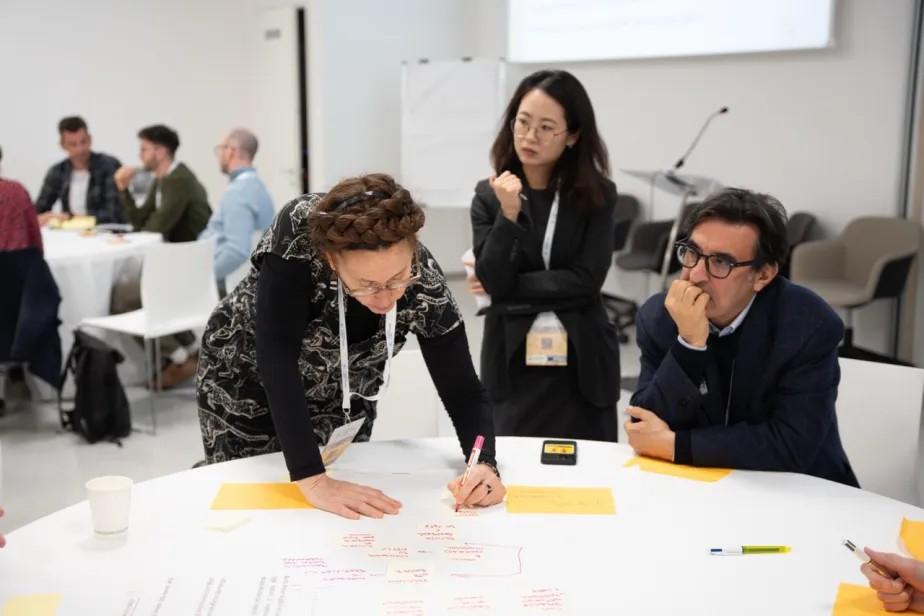
An experienced service designer, Salgado brings researchers, citizens, and decision-makers together through design to advance the sustainability transition. Now recognized as a Design Forerunner, she shows what design can do when it’s used to build shared understanding and drive real impact.
Mariana Salgado seems to have more hours in her day than the rest of us.
She works as a service designer at ICOS, the research infrastructure that measures greenhouse gases, publishes a weekly design podcast to thousands of listeners around the world, and teaches occasionally at universities, including in her native Argentina.
On top of that, she helps coordinate a network of designers working in public administration in Finland.
“I’ve often had to spell out, very concretely, everything service designers can do inside organizations and where their skills can be put to use. I want to show how valuable design expertise is from a strategic point of view,” Salgado says.
Ornamo is now honoring Salgado with its Design Forerunner award. It’s a recognition for decades of impactful work advancing sustainability, for her broad professional expertise, and for using design as a genuine tool for change.
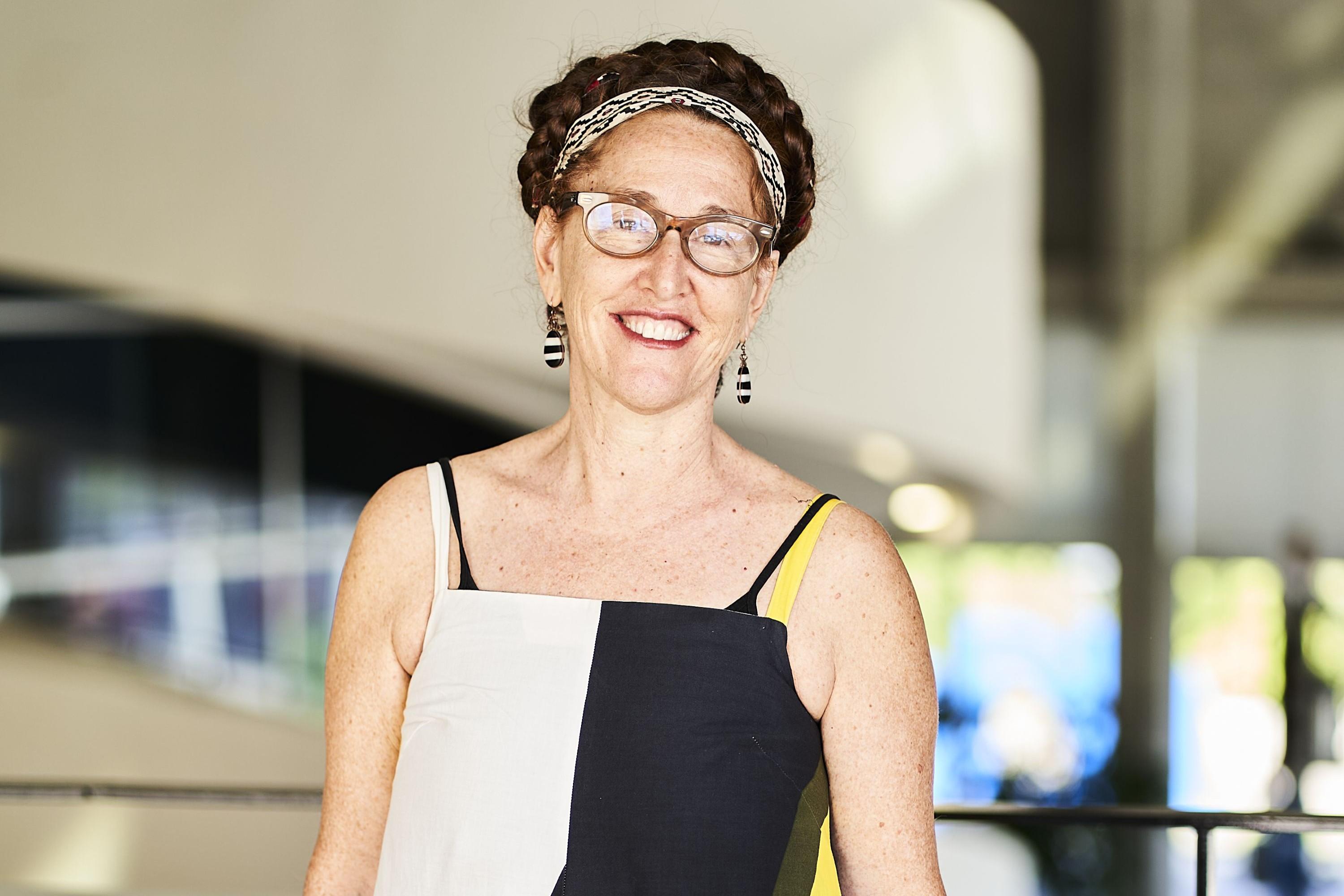
Translating the research perspective
Salgado’s employer, ICOS (the Integrated Carbon Observation System), is a European research infrastructure that brings together researchers, monitoring stations, measurement equipment, and open data to track greenhouse gases.
The organization runs 180 research stations across 16 European countries. Salgado herself is based at the Finnish head office in Kumpula, Helsinki.
“Together with my colleagues, I design services that turn complex research data into practical tools that support climate action, decision-making, and a more sustainable future,” she explains. Through this work, the research perspective becomes more visible in climate action and climate-related decisions.
Designing for research infrastructure is still fairly new territory, Salgado says, and her two years at ICOS have largely gone into groundwork: mapping user needs and developing service concepts. One of her current projects, for instance, uses a Service Design Labs approach to co-create new solutions.
“ICOS is the first research infrastructure to hire a service designer, even though many infrastructures build services of their own. That’s exactly why I want my work to show what value design can bring to climate action.”
Design as a tool for equality
Mariana Salgado first came to Finland from Argentina more than 25 years ago as an exchange student. She went on to complete her master’s degree there and later earned her doctorate at what was then the University of Art and Design Helsinki.
Before her current role, Salgado worked as a service designer at, among other places, the Ministry of the Interior and the Finnish Immigration Service (Migri). Social sustainability, accessibility, and social impact were the guiding themes of her work during that period.
Although Salgado has built a home in Finland and speaks the language fluently, she’s well aware of the challenges tied to immigration and equality.
“Designers have tools that can help amplify the voices of people in vulnerable positions. The best solutions are grounded in people’s actual needs and experiences.”
Building design’s presence in public administration
Her work in public administration helps explain why she’s being recognized as a forerunner. At Migri, for example, there were initially just two service designers during her time there.
On Salgado’s initiative, the agency launched an internal service design ambassador program, drawing in experts from different units across the organization.
There are plenty of people in public administration who have design skills, or who use design thinking in their work without necessarily calling it that – enough, in fact, to fill a 600-member network for public-sector designers.
“That expertise often goes unrecognized if someone’s title is ‘project manager’ or ‘specialist’ rather than ‘designer,'” Salgado says.
Spreading knowledge that makes a difference
Change moves slowly in the sustainability transition, and adopting new ways of working is rarely easy or comfortable. Even so, Salgado believes design expertise can make that transition smoother for people. Genuine understanding builds acceptance and commitment to change. That, in turn, is what gives a designer’s work real impact.
“My job is to make sure the knowledge researchers produce is actually usable by others. Services create real added value when they help people understand environmental problems, support policy decisions, or open the door to new research.”
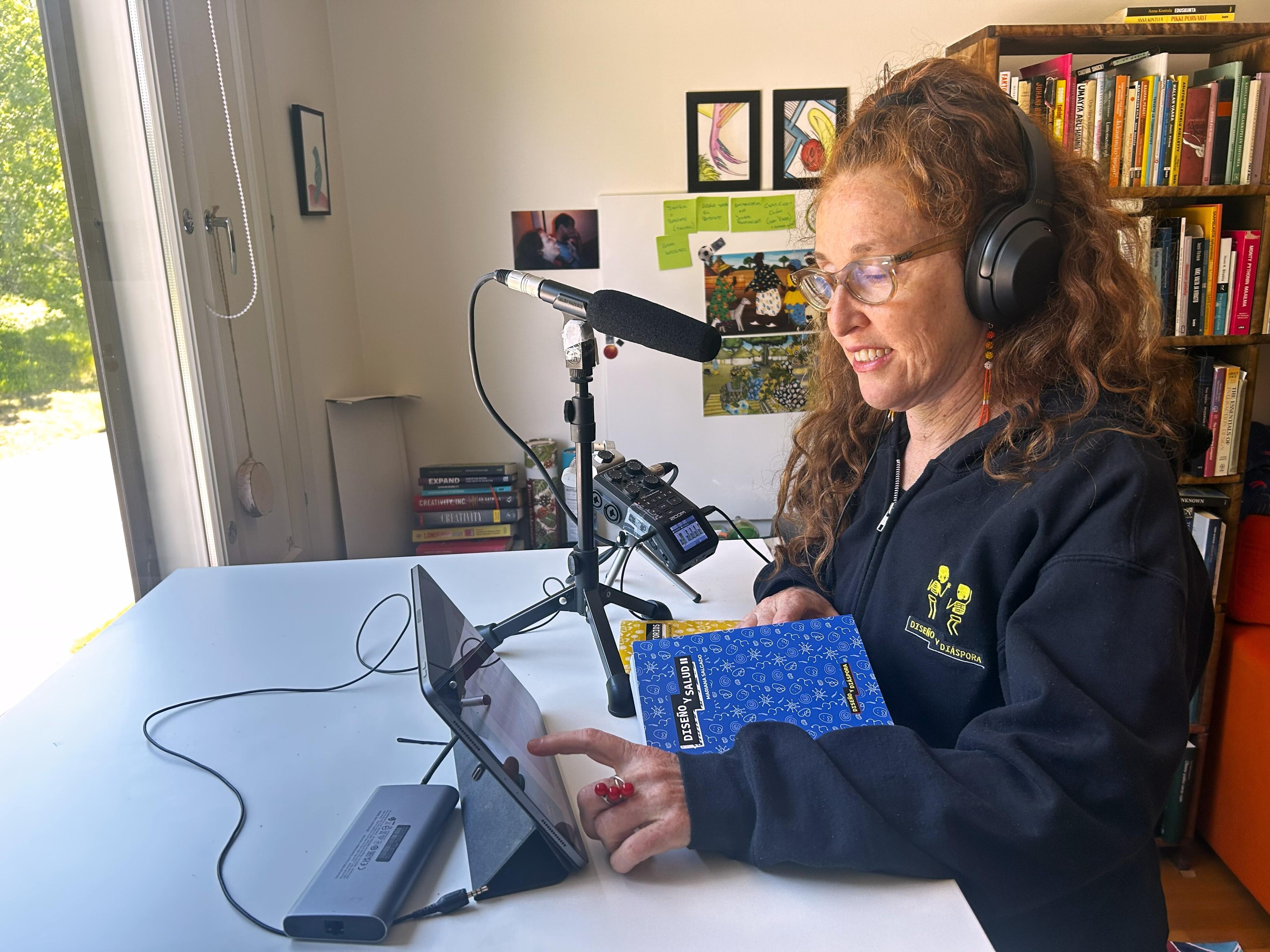
Salgado also pursues impact outside her day job. Every week, on her podcast Diseño y Diáspora, she interviews international experts about the links between design and social change.
The podcast, produced in three languages, has covered more than 700 episodes’ worth of ground – everything from transition design and public service design to, in some episodes, the design of peace or health.
“I think of the podcast as a way of driving change, a platform where different experts can share knowledge and help push things in a positive direction.”
It’s now the most-listened-to design podcast in the Spanish-speaking world, and more than 60 universities recommend or use it as part of their courses.
Systemic change needs design
If there’s a throughline in Mariana Salgado’s career, it’s using design to enable social change.
“What interests me most is how design can support things like climate action or peacebuilding,” she says.
That drive to understand phenomena and the perspectives tied to them runs through everything Salgado does. She works with design tools and theories, but at its core, she says, the work is really about thinking – which will only become more valuable going forward.
“Design as a way of thinking encourages collaboration, builds tolerance for uncertainty, reduces polarization, and helps societies find the right direction. Designers have a knack for connecting different perspectives and turning knowledge into action.”
She sees the sustainability transition as achievable only through multidisciplinary collaboration firmly grounded in science, and for her, that means constantly working to break down the boundaries between fields of expertise, and building understanding in the space between them.